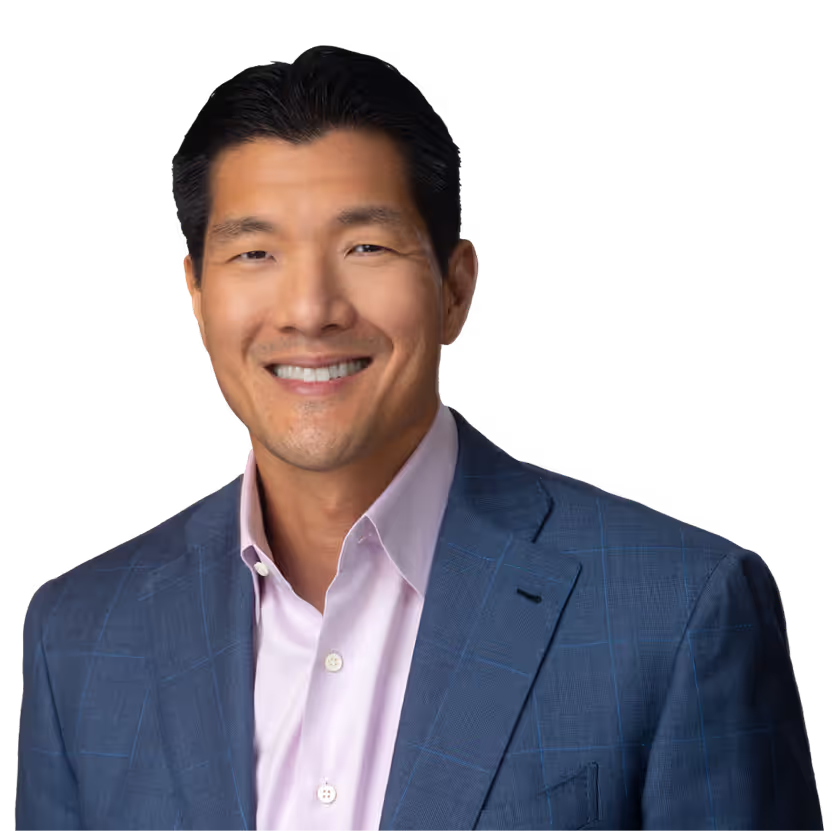
Written by
Gordon L. Chen, MD
CEO of BLU by ThriveWell™ and Board-Certified Cardiologist
August 14, 2026
.png)
Over the course of my career as a physician, I have had the privilege of leading a national healthcare organization widely considered one of the leading primary care providers in the country. As a Board-certified cardiologist and internal medicine physician, I have seen firsthand the remarkable strengths of traditional medicine. It has saved countless lives. When someone is having a heart attack, a stroke, or another life-threatening emergency, the heroes of traditional medicine step in, stabilize the patient, perform procedures, and often deliver extraordinary outcomes.
Traditional medicine is highly effective in acute and critical situations. Emergency departments, hospitals, and specialists are built to respond when something goes wrong, and that system is essential; we are deeply grateful for it. But being essential for treating illness is not the same as being built for optimizing long-term health. That calls for a more personalized, preventive model. Most physicians are employed by hospital systems, where the infrastructure is largely focused on diagnosing and managing conditions after they develop.
Many physicians genuinely care about prevention, but the system, and even our training, often limits the time and tools available to focus on proactive optimization.
In parallel, the health and wellness movement has rapidly gained momentum. This space emphasizes prevention, nutrition, exercise, recovery, supplements, hormones, peptides, and proactive strategies to extend healthspan. For many people, this approach is appealing precisely because it aims to keep them out of the hospital and help them avoid chronic disease altogether.
It's no surprise this creates real tension. Many people are left wondering who to trust: traditional medicine, with its focus on medications and referrals, or the health and wellness community, with its emphasis on supplements, hormones, and emerging therapies.
The honest answer is: it depends, and not in a vague or uncertain way. Each approach brings distinct value, yet neither is complete on its own. Traditional medicine offers deep clinical expertise and a strong foundation for diagnosing and managing disease. The health and wellness space brings powerful tools for prevention and optimization. The real challenge, and the real opportunity, is knowing when and how to apply each with intention.
This is especially true for individuals living with early or established chronic conditions such as high blood pressure, prediabetes, diabetes, high cholesterol, or elevated calcium scores. Roughly 76% of U.S. adults report one or more chronic conditions.¹ These individuals often feel caught between two worlds, unsure whether to pursue medications, lifestyle changes, supplements, or newer therapies. Without guidance, it can feel confusing, even overwhelming.
This is why we created BLU by ThriveWell®. Our goal is to bridge the gap between traditional medicine and proactive wellness.
We begin by analyzing each individual's foundational health, the baseline from which everything else is built, and guide them toward optimization through evidence-based longevity medicine. This approach starts with lifestyle, guided by our 5 Drivers of Health and Wellness©, while thoughtfully integrating traditional medicine and advanced longevity strategies tailored to each person's needs.
The 5 Drivers – Personal, Community, Physical, Nutritional, and Spiritual – form the foundation of health and longevity. Lifestyle interventions come first because optimizing these areas can dramatically improve outcomes. From there, traditional medicine continues to play an important role, particularly in safely managing risk factors. Evidence-based longevity tools, such as targeted supplements, hormone optimization, peptides, advanced testing, and personalized coaching, may also be appropriate, but not for everyone, and not all at once.
This is where integration matters. It is not about using every tool available. It is about using the right tool, at the right time, for the right individual. In some cases, medications are necessary and lifesaving. In other cases, as lifestyle improves, medications can be safely reduced or discontinued under physician supervision. We see this regularly: blood pressure improves, metabolic health strengthens, visceral fat declines, and individuals regain vitality and independence.
Because we are attracting team members who genuinely love seeing people get healthier, regardless of the modality used, we find tremendous purpose in helping our members meaningfully extend their healthspan. The goal is not simply to treat disease, but to add healthy years, what we call ThriveYears, to our members' lives. We draw on every available tool, whether from traditional medicine or the health, wellness, and longevity space, in a thoughtful and personalized way, and we remove or lower medications that are no longer needed once health is optimized.
Ultimately, the question is not whether to choose traditional medicine or health and wellness. The answer is to thoughtfully integrate both. Traditional medicine provides safety and expertise when disease is present. Health and wellness provides proactive strategies to prevent disease. Evidence-based longevity medicine brings them together.
Our mission at BLU is to add ThriveYears by optimizing the 5 Drivers of Health and Wellness© and bringing the best of evidence-based longevity medicine to everyone we serve. By bridging the gap between traditional medicine and health and wellness, we aim to provide a clear, integrated path forward, so you can live longer, healthier, and more purposeful lives. Because the future of healthcare is not about choosing sides. It's about bringing them together to fully optimize your healthspan.
Sources & References
¹ Watson KB, Wiltz JL, Nhim K, Kaufmann RB, Thomas CW, Greenlund KJ. Trends in Multiple Chronic Conditions Among US Adults, By Life Stage, Behavioral Risk Factor Surveillance System, 2013–2023. Prev Chronic Dis 2025;22:240539. DOI: http://dx.doi.org/10.5888/pcd22.240539
Get the latest from trusted physicians, fitness experts, and wellness leaders covering everything from cutting-edge longevity science to simple, actionable tips to stay strong and vibrant.
.avif)
.avif)